Every puja begins with water: sipped, offered, sprinkled. The vessels carrying it are small, handled daily, and polished rarely. Their maintenance differs from cooking metal in ways worth knowing.
What sets them apart:
They touch only water, flowers and sandalwood paste. No oil, no acid, no heat. Their enemies are mineral deposits from standing water and dust, not cooking grime.
They are handled wet constantly, which actually slows heavy tarnish; frequent use keeps surfaces rinsed.
Care that fits:
Rinse and wipe dry after each use. That single habit prevents nearly every problem these vessels develop.
Weekly, a soft cloth pass restores shine. No abrasives needed; nothing stubborn should be forming if daily drying happens.
Monthly, the full routine: warm soapy wash, dry completely, brief storage away from the puja table if it doubles as clutter surface.
Deposits and what they mean:
White crusty lines mean hard-water minerals. Soak briefly in a little warm water with lemon, then rub gently with cloth. Never scrape with metal tools; the thin walls of achmani vessels dent permanently.
Greenish tints near joins indicate trapped moisture. Dry better, especially inside spouts and under rims.
Handling notes:
These vessels travel between households for ceremonies. Wrap separately in cloth; their small size makes them easy to lose inside larger bundles.
Respect their role: the smallest vessels carry the first offering of every ritual. Quiet maintenance suits quiet importance.
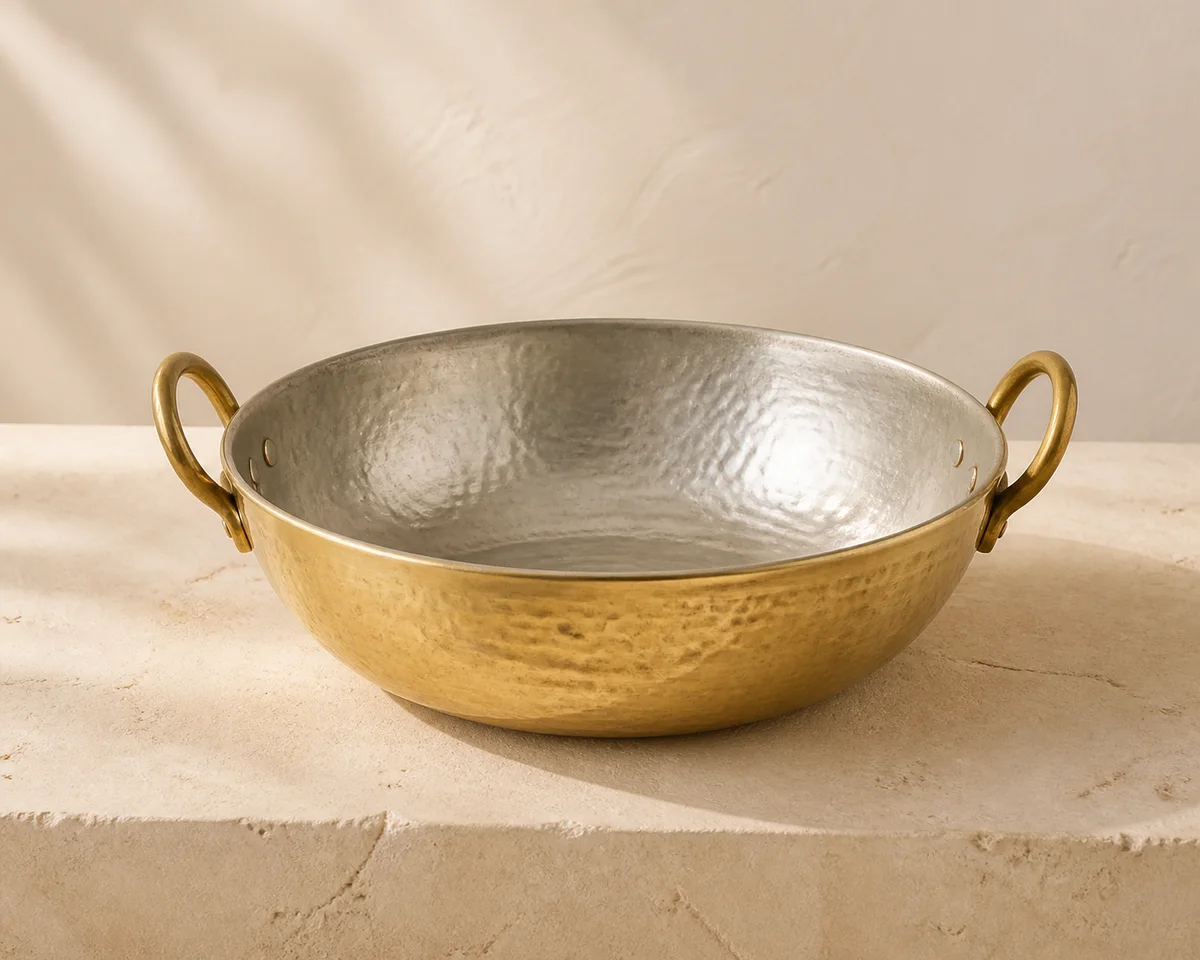
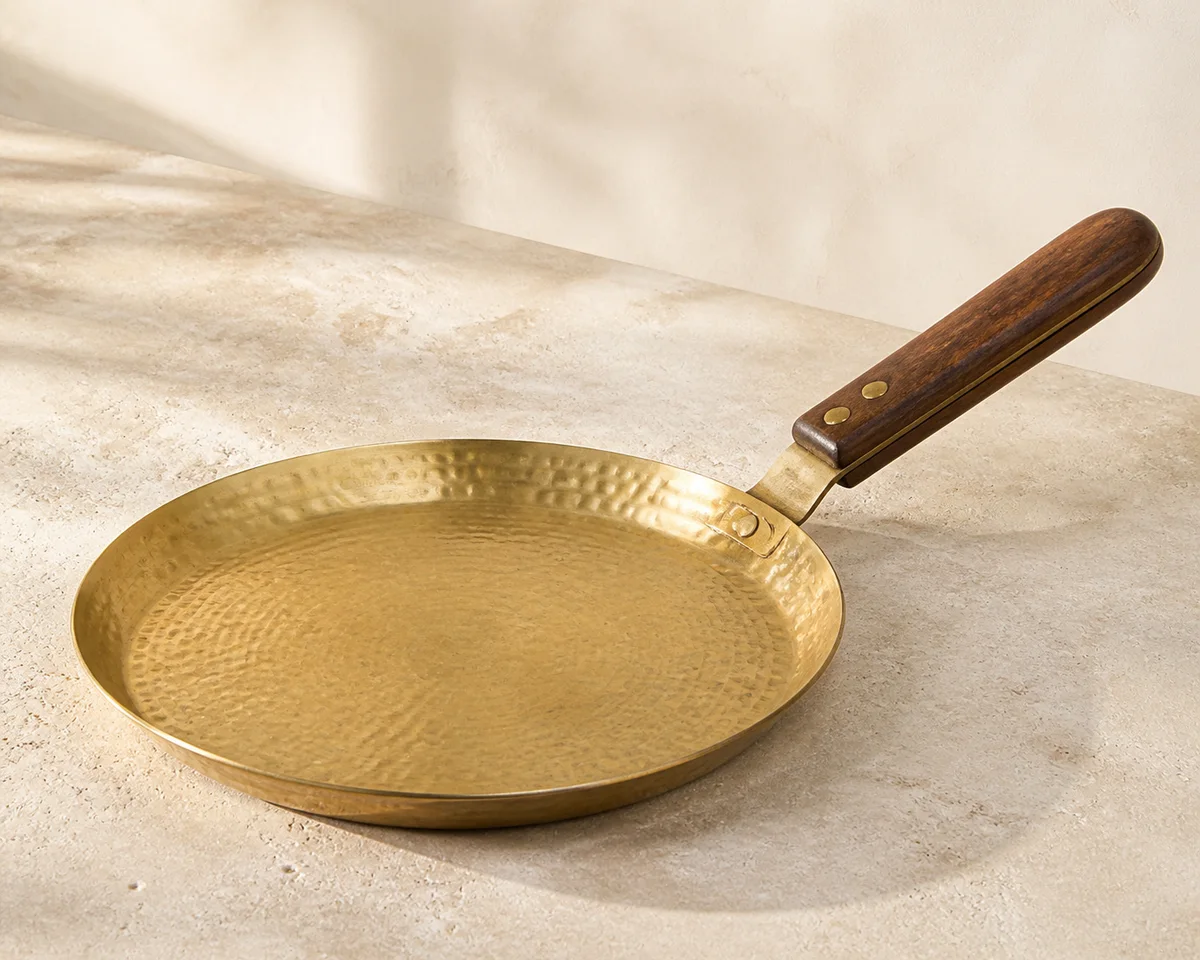
Small achmani spoon and panchpatra bowl polished on puja cloth.