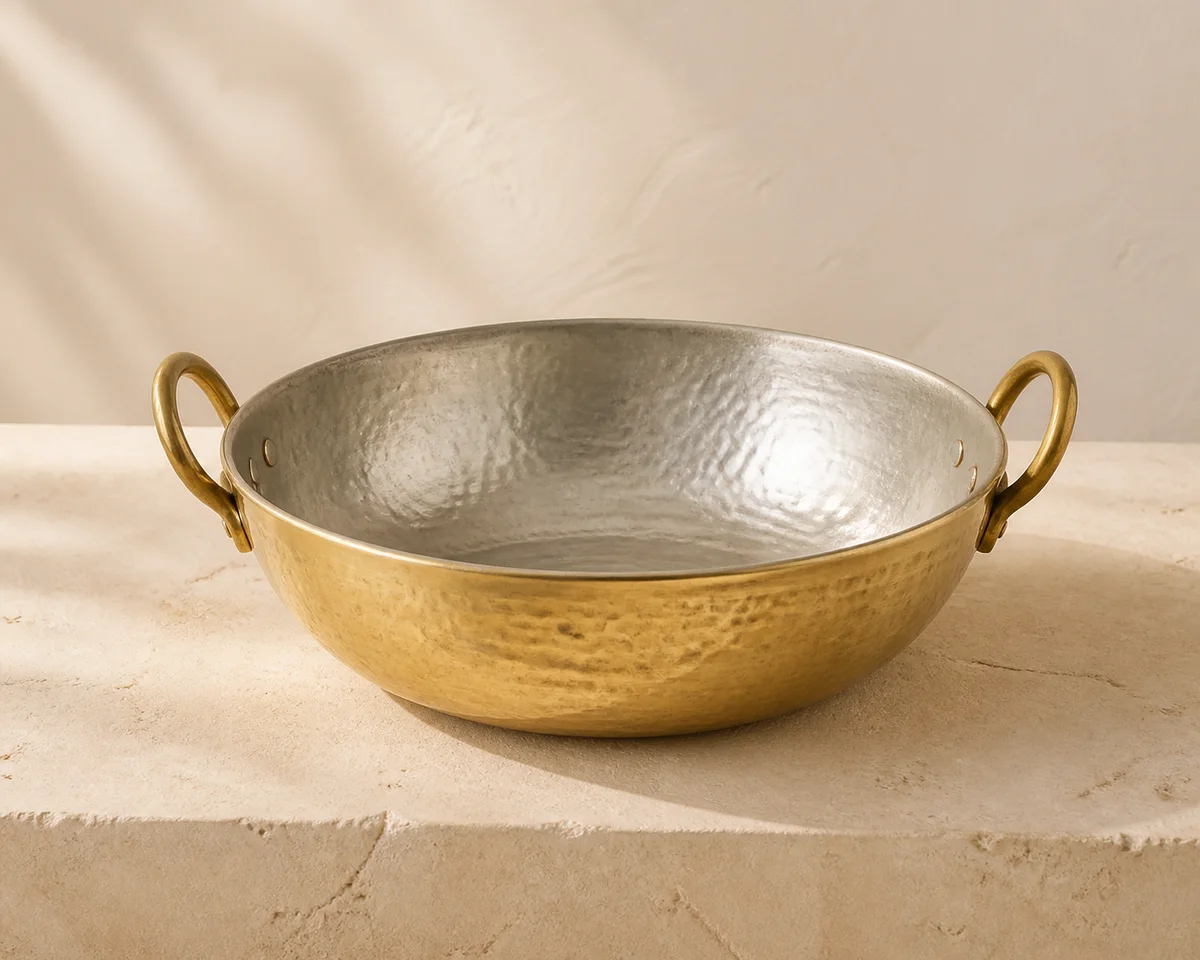
Brass utensils, peetal as it is called across Indian kitchens, clean in two separate jobs, and confusing them causes most damage. The inside cooking surface, if your vessel is kalai-lined, washes with nothing stronger than warm water and mild soap. The outside metal takes tarnish removal when you want shine. This guide covers both, plus what never to do.
Daily cleaning (the inside)
Wash by hand with warm water, mild dish soap, and a soft sponge. Rinse. Then the step that matters more than any cleaner: towel dry completely, and leave the vessel open to air for ten minutes before storing. Standing water dulls surfaces faster than cooking ever will.
The dishwasher stays off limits. Its detergent is a strong alkaline blend that fogs and pits soft metals; ninety seconds of hand washing does the same job without the damage.
Removing tarnish (the outside)
For darkened or cloudy exteriors, the traditional method still works best:
- Take a ball of tamarind pulp dipped in clean wood ash or a pinch of salt.
- Rub the cooled, dry surface in circles, section by section.
- Rinse with warm water.
- Towel dry immediately and fully.
A lemon half with salt works the same way for lighter tarnish. Both methods use mild acid plus gentle grit, lifting oxidation without cutting the metal.
Methods compared
Every kitchen method below runs on the same chemistry: a mild acid loosens the oxide, a soft grit carries it away. Pick by how much tarnish you have and what is already on your shelf.
Tamarind and ash
The default. Acid plus fine grit, cheap, and gentle enough for weekly use. Best for regular maintenance and festival deep cleans. The full walkthrough lives in our tamarind method guide.
Lemon and salt
Faster than tamarind for light, even tarnish. Cut a lemon, dip in salt, rub, rinse within a minute, dry. Do not let it sit: the acid works quickly on soft metal.
Tomato ketchup
The lazy fix that genuinely works. Spread a thin layer on the tarnished exterior, wait five minutes, rub with a cloth, rinse. The vinegar and tomato acids do the lifting. Good for small spots and carved details where rubbing is awkward. Rinse well; sugar residue attracts dust.
Atta and lemon paste
Flour holds the acid against the surface and adds mild grit. Two spoons of atta, enough lemon juice to make a paste, scrub gently, rinse, dry. Useful when a vessel needs an overall refresh rather than spot treatment.
Pitambari powder
The commercial option many Indian kitchens already own. It is made for copper and brass and works fast, but it is a stronger abrasive than anything above. Save it for neglected pieces, not weekly rounds, and keep it off the kalai lining entirely.
Vinegar
Dissolves hard water spots and light tarnish, but it is the harshest acid in this list. Diluted, brief, outside only, then rinse and dry. Never soak a vessel in it.
Every method above is for the outside metal only. The inside lining, if your vessel is kalai-lined, stays with warm water, mild soap, and a soft sponge no matter what.
What never to touch brass with
- Steel wool or scouring powder: cuts deep scratches into soft metal.
- The dishwasher: alkaline detergent fog.
- Polish on the tin-lined interior: the lining is meant to be grey and working, not shiny.
- Oven cleaner or harsh chemical dips: they keep eating after the tarnish is gone.
FAQ
Why did my brass turn black after cooking? Darkening where flame meets metal is patina, not dirt. It is harmless, cooking is unaffected, and it polishes off only if you want it off. See our patina versus damage guide.
Can I use vinegar? Diluted, briefly, on the outside only, followed by thorough rinsing and drying. It dissolves mineral spots and light tarnish; do not soak vessels in it.
How often should I polish? Never, functionally. Shine is optional appearance. Most owners polish before festivals and let patina run otherwise.
Hands rubbing tamarind pulp over a darkened brass vessel's exterior, rinsed vessels drying behind.