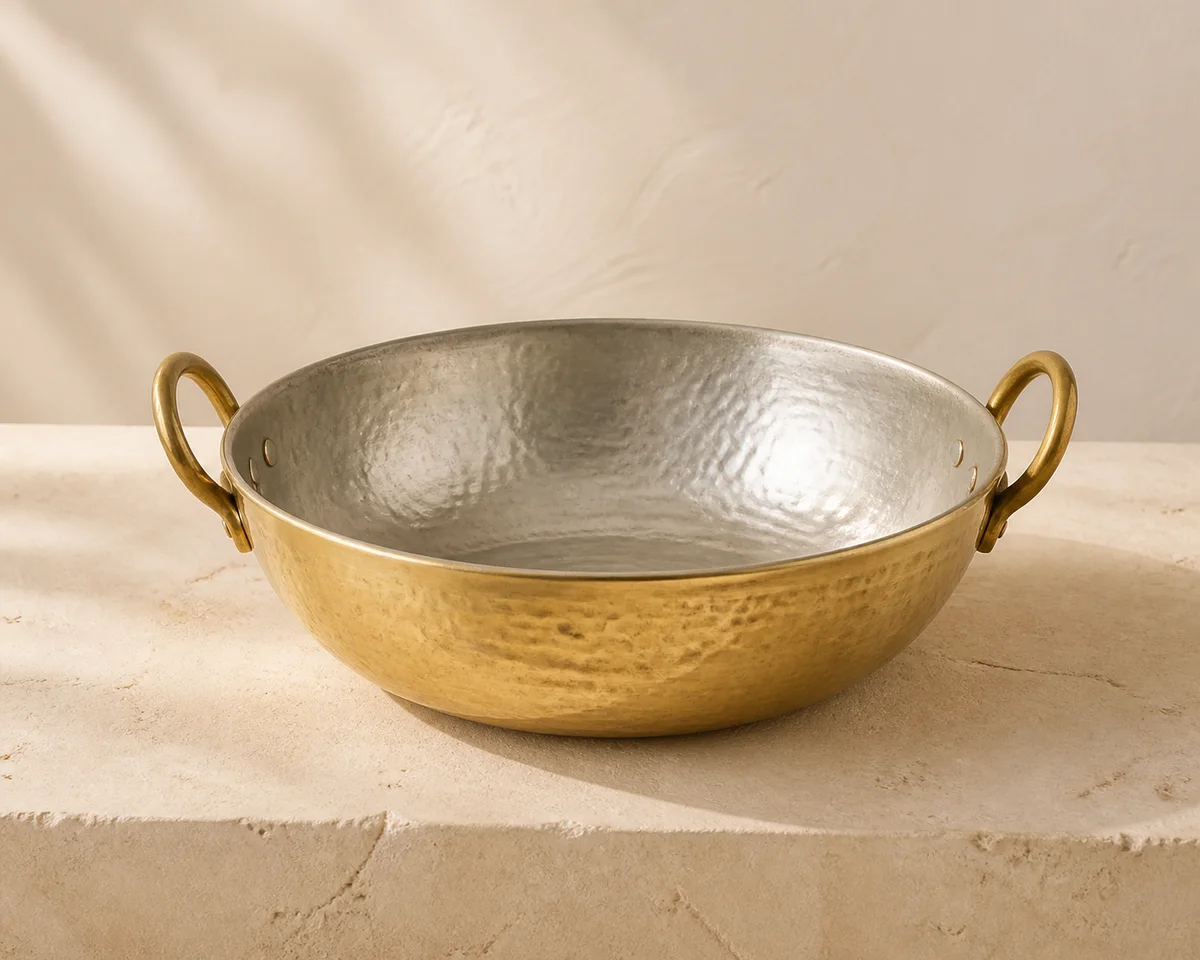
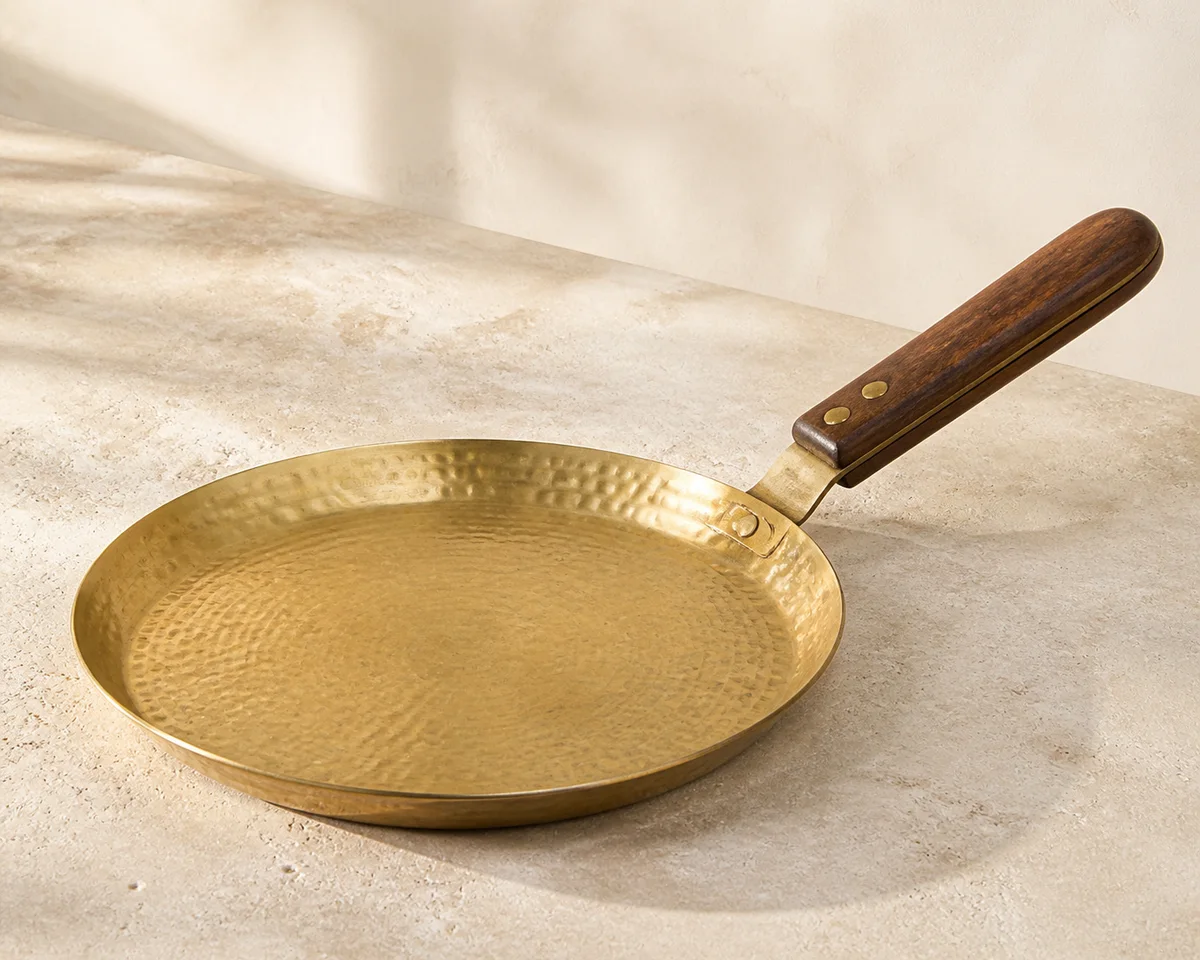
Pickle work is hard on equipment. Oil, salt and fruit acids together attack surfaces that handle each alone without complaint; vessels used for pickle duty deserve a specific aftermath routine.
Assessing what the season did:
Golden staining that wipes damp usually rinses away with warm water and patience. Deep orange patches signal oil-and-acid bonding into the surface; these need the tamarind-or-lemon routine, not panic.
Rough or pitted texture inside means the exposure went further than colour. Pitting does not reverse; decide honestly whether the vessel returns to pickle duty or retires to gentler work.
Cleaning sequence:
Empty completely and wipe oil with newspaper or cloth first. Solvent-first thinking saves half the washing.
Warm water soak with mild soap overnight loosens salt crusts from rims and lids where they concentrate.
Lemon-and-salt or tamarind paste for stained areas, worked in circles with a soft cloth, rinsed fully. Acid-based cleaning followed by thorough rinsing matters double here because residues continue working if left.
Final wash, complete dry, and a thin oil wipe before storage to normalise the surface.
Prevention next season:
Glass or ceramic jars hold the actual pickle; metal serves best only in brief contact stages like stirring masala or sun-exposure hours under cloth. Keep direct long-term contact out of the arrangement entirely.
Wash pickle-contacted vessels the same day rather than letting acid sit overnight.
Pickle deserves its vessels and vessels deserve their aftercare. One evening of attention each season keeps both traditions running.
Stained vessel soaking beside jar of mango pickle on kitchen counter.