Dry potato sabzi looks simplest and punishes haste hardest. The dish contains two contradictory goals, crisp-edged potatoes with creamy interiors, achievable only through heat management.
Boil first, always, separately, salted water until just tender. The pan's job begins after: cooling, peeling if you peel, breaking into irregular pieces whose ragged edges will become texture.
Fat generously, pan warm, pieces in one layer with breathing room. Then the discipline: leave them alone. Moving potatoes before their contact surfaces toast produces tearing and mush; four to five minutes of patient stillness per side builds golden crusts that carry turmeric, jeera, and whatever else your region insists upon.
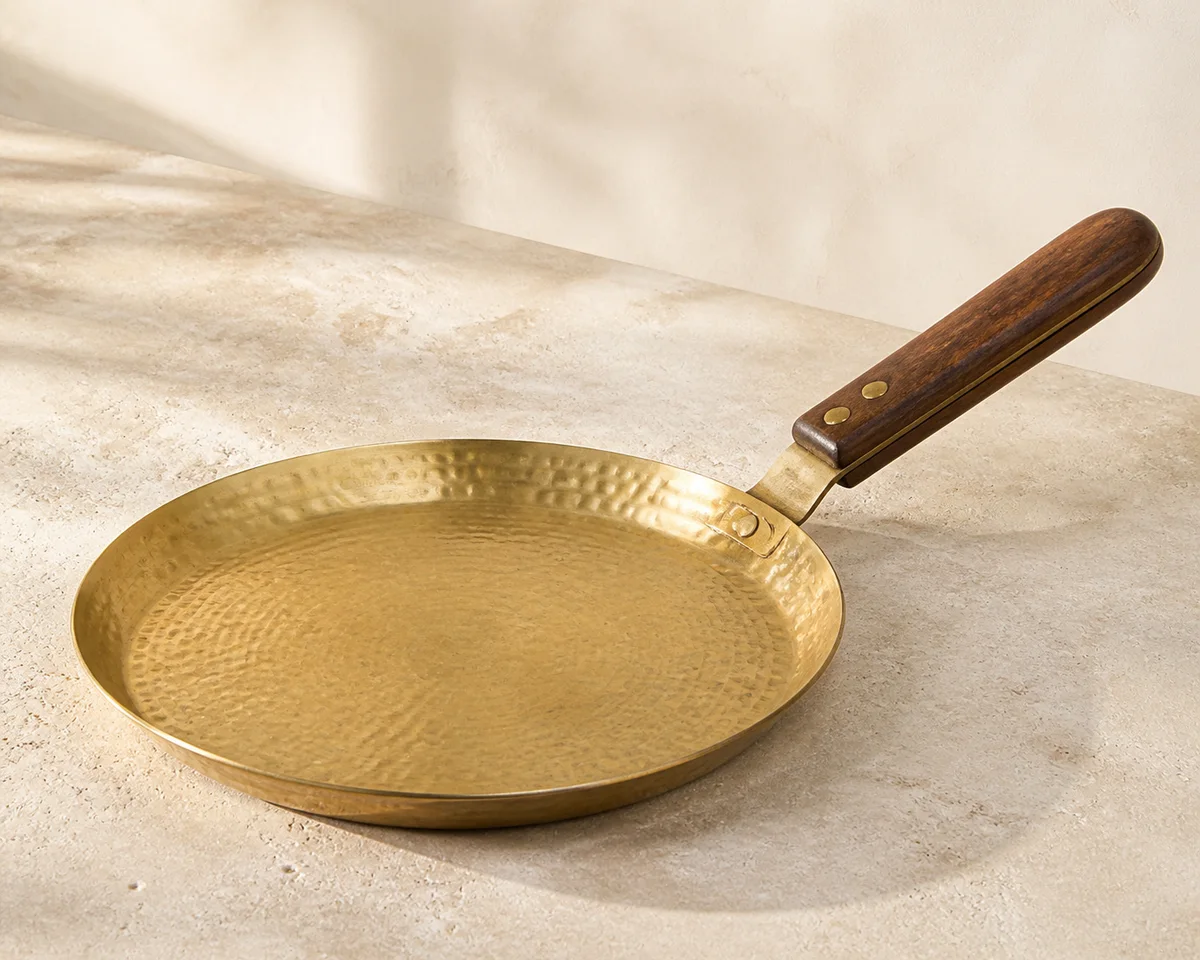
Heavy metal earns its keep twice here: even browning across the whole contact zone rather than one scorched hotspot, and holding temperature through multiple batches without preheat panic.
Finish with amla powder or lemon, amchur by preference, coriander always. Serve with puri for ceremony or dal for Tuesday.
Total technique summary: boil, rest, fry undisturbed, flip once, season late. The pan handles the middle part, which is most of it.
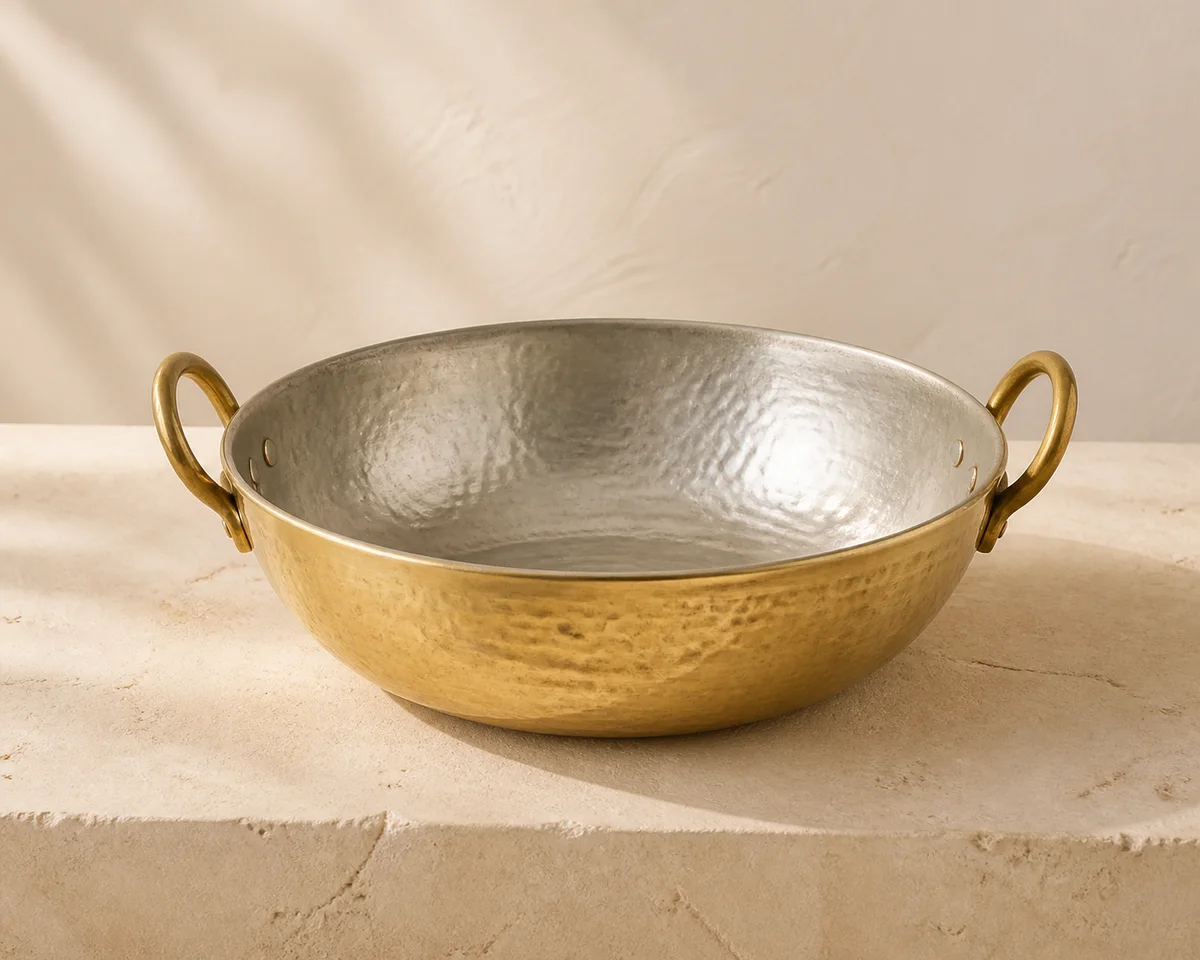
Golden-edged potato pieces crisping in a single layer across a kadhai base.