Washing reveals something black inside a beloved vessel. Before any scrubbing, identify which of three things you are looking at.
Grey-black smudge that wipes off with a soft sponge: likely tin transfer from a spoon left resting, or scorch film from yesterday's overheated oil. Harmless either way. Warm soapy wash removes it; the lining beneath will be intact silver-grey.
Hard dark crust welded to the base: burnt-on food or repeatedly scorched oil, usually from high-flame empty heating or neglected residue layers. Soak warm, scrape gently with wood, repeat across two evenings if needed. If crust sits where bare yellow shows beneath, the lining there is gone.
Uniform darkening across the whole interior: this is not residue at all but aged tin — patina doing exactly what tin does. Scrubbing it is vandalism; it washes nothing away and wears the lining for nothing.
The rule underneath all three: black plus bare yellow equals re-tinning conversation. Black over grey equals washing technique. Learn the difference once and vessels stop frightening you.
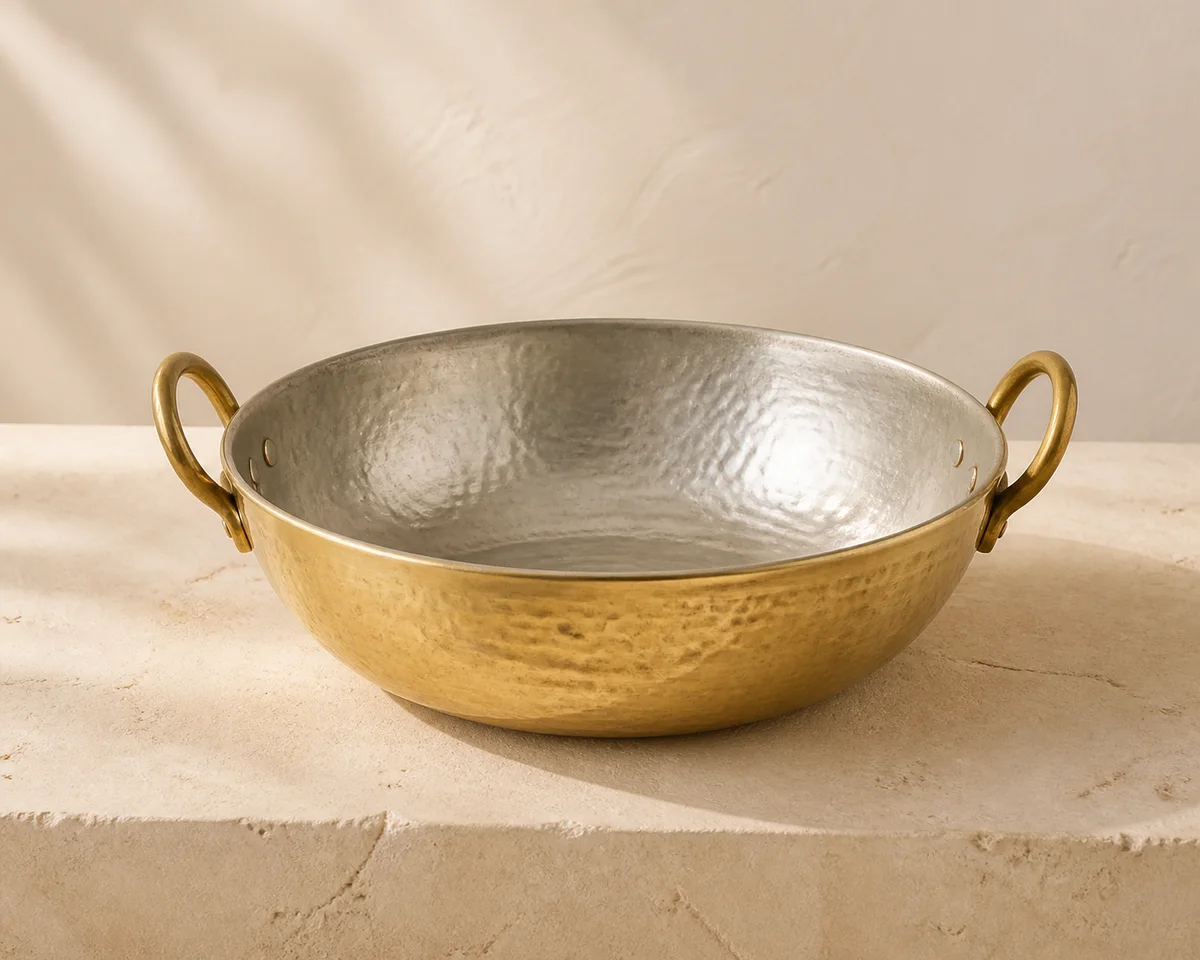
Interior of a brass vessel showing dark tin patina under window light.