Product pages borrow workshop vocabulary that nobody teaches outsiders. Ten terms, plainly:
Gauge — sheet thickness, expressed confusingly (lower gauge = thicker metal). Translated: ask for millimetres or kilogrammes instead.
Raised / raising — hammering a flat sheet into hollow form over a stake. The core act of vessel-making.
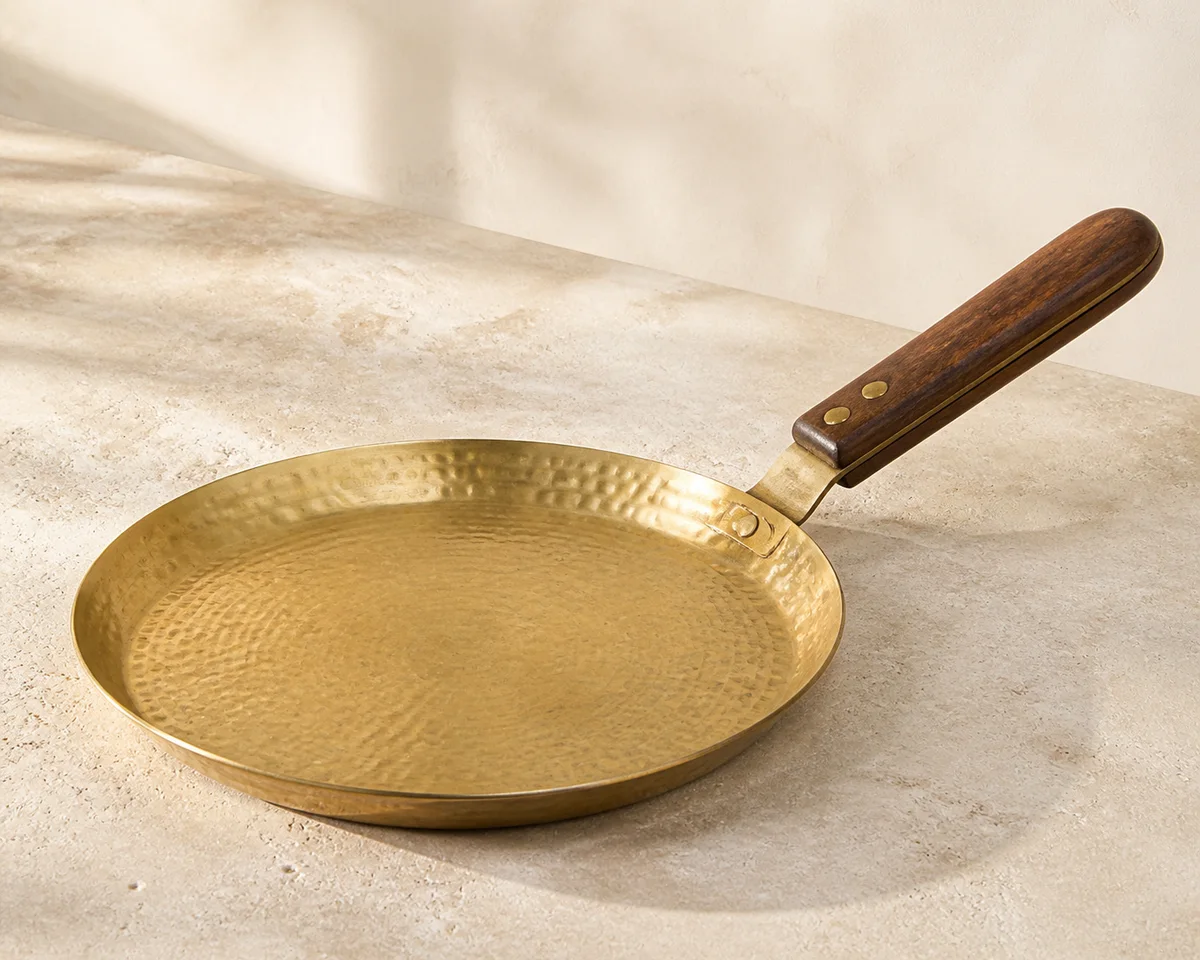
Planished — light overlapping finish-hammering that hardens and textures. Fine planishing equals many hours equals higher price.
Annealed — reheated between hammering sessions to soften metal so it won't crack. Sign of proper technique.
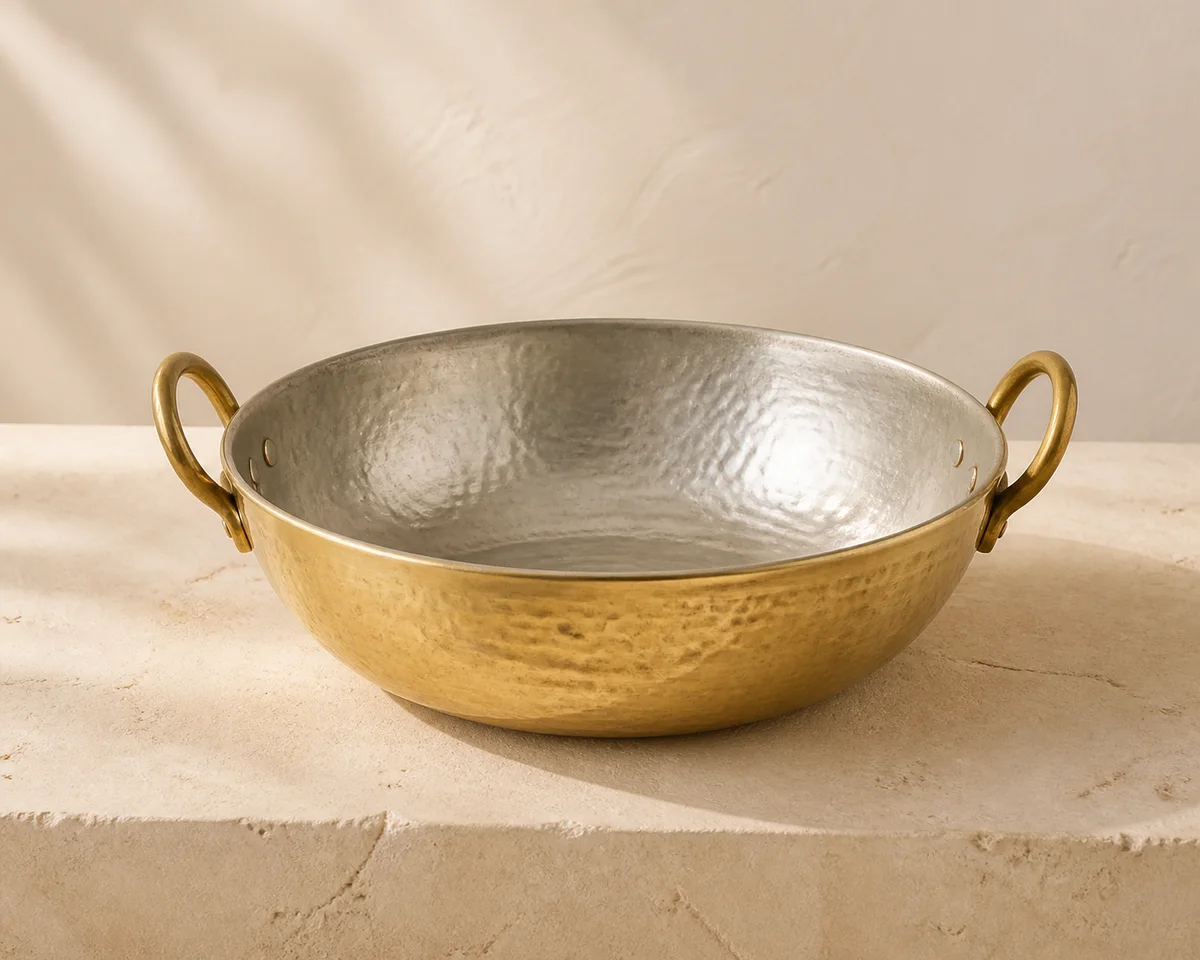
Kalai / tinned — molten pure tin flowed across the food-contact surface. The reason cooking in brass is possible.
Thathera — the hereditary smith caste/tradition producing much of North India's brassware. "Thatheras' work" signals genuine handcraft lineage.
Seam / seamless — joined-sheet versus raised-from-single-piece construction. Seamless commands premium legitimately.
Brazed — joints joined with brass alloy filler. Fine for handles; wrong for food surfaces.
Patina — aged surface tone. Character on antiques, optional elsewhere.
Re-tinning — renewing worn lining. The feature separating decades-long vessels from disposables.
Speak this fluently and no listing can con you.
Illustrated glossary card pairing brass terms with simple line drawings.