Ceramic-coated pans exploded across kitchens promising health and ease. Lined brass promises nothing so modern but delivers something longer. Setting marketing aside clarifies the actual trade.
Coating life is measured in months-to-years. Every ceramic surface degrades — microscopic abrasion from utensils, thermal cycling, detergent — until release performance fades and the pan becomes an ordinary, slightly worse metal pan wearing a dead coating. Replacement isn't a risk; it's the business model. The purchase price buys a subscription, effectively.
Kalai life runs years per lining, then renewal returns the vessel to full service indefinitely. Same release principle — a quiet, inert surface between food and reactive metal — but the surface is consumable while the vessel is permanent. Buy once, re-line occasionally, inherit eventually.
Performance differences worth knowing:
Both release eggs and dosa gracefully when properly heated; both stick when abused by cold-oil starts. Technique matters more than brand either way.
Coatings fear high heat (degradation accelerates) and metal utensils. Tin fears steel-wool zealots but tolerates normal stirring fine.
Coated pans die quietly — no warning before failure. Linings announce: grey goes patchy, wear-signs appear, scheduling re-tinning becomes possible instead of sudden death.
Cost arithmetic over ten years favours lined metal almost everywhere, dramatically where cooking is frequent.
Choose ceramic for temporary kitchens and minimal commitment. Choose lined brass for kitchens you plan to keep.
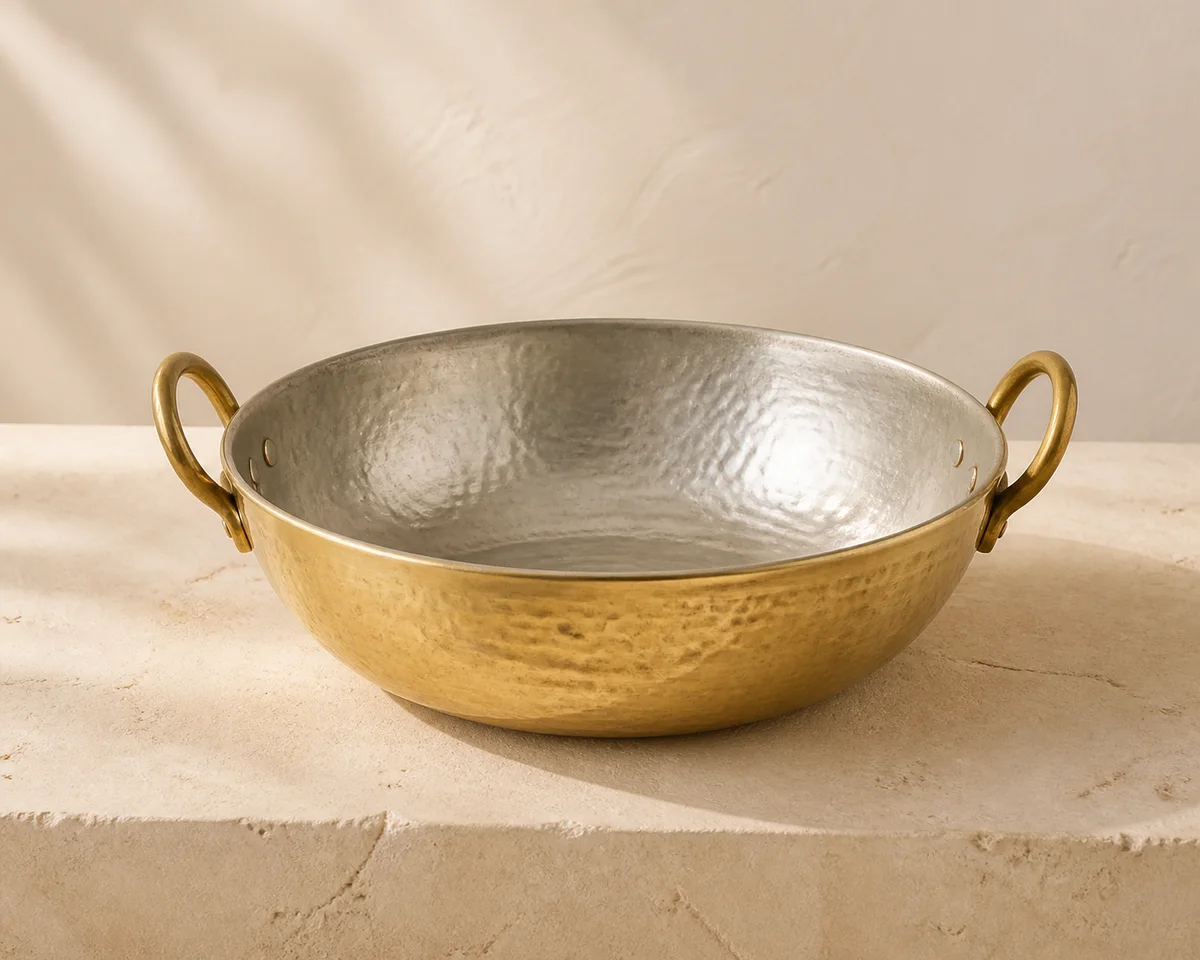
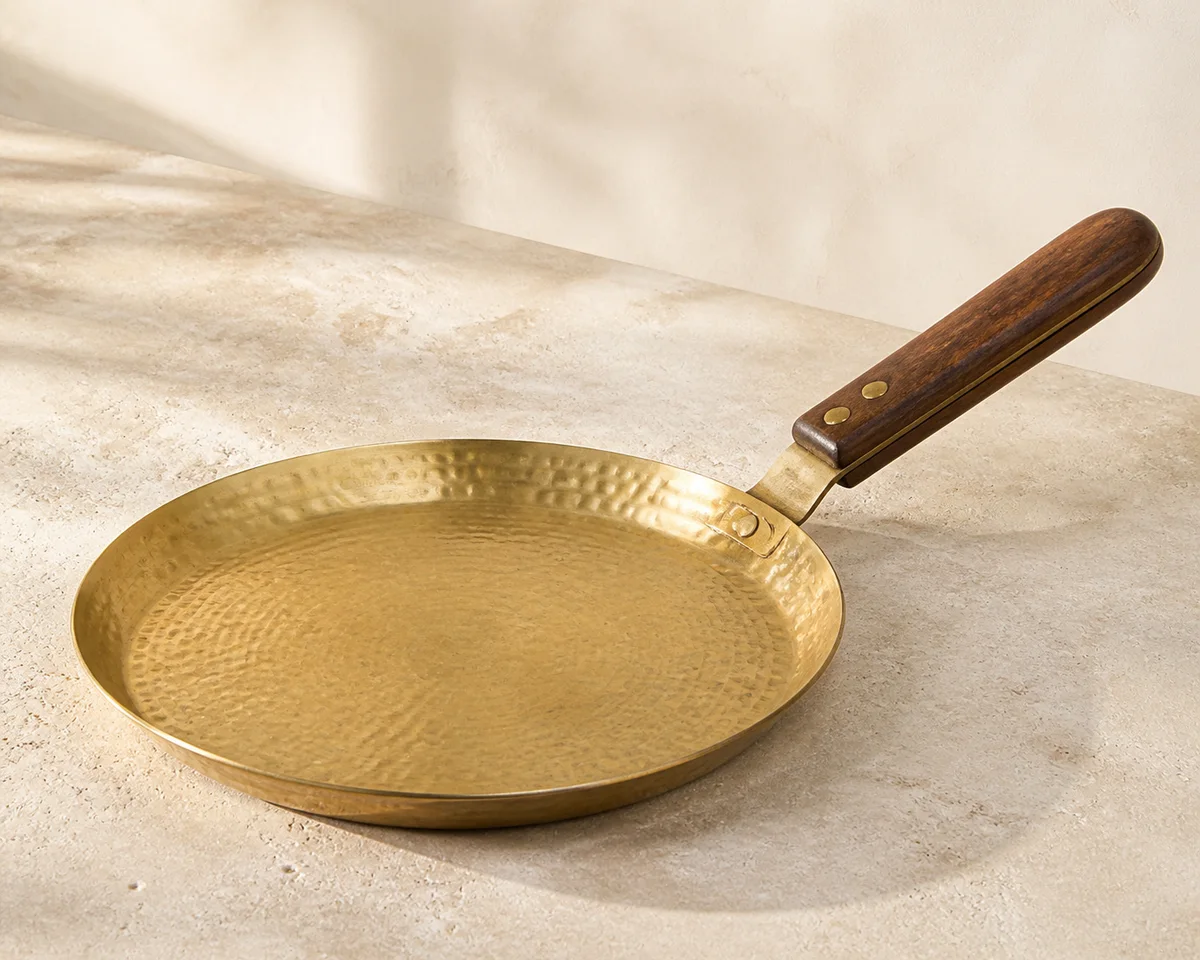
Worn ceramic-coated pan beside fresh silver-lined hammered vessel.