Most buying guides start with vessels and work outward — sizes, gauges, options. Flip the direction and decisions simplify dramatically: list what you actually want to cook, then let the dishes specify the equipment.
Try it. Write your five most-made dishes and two aspiration dishes. Now read what they demand:
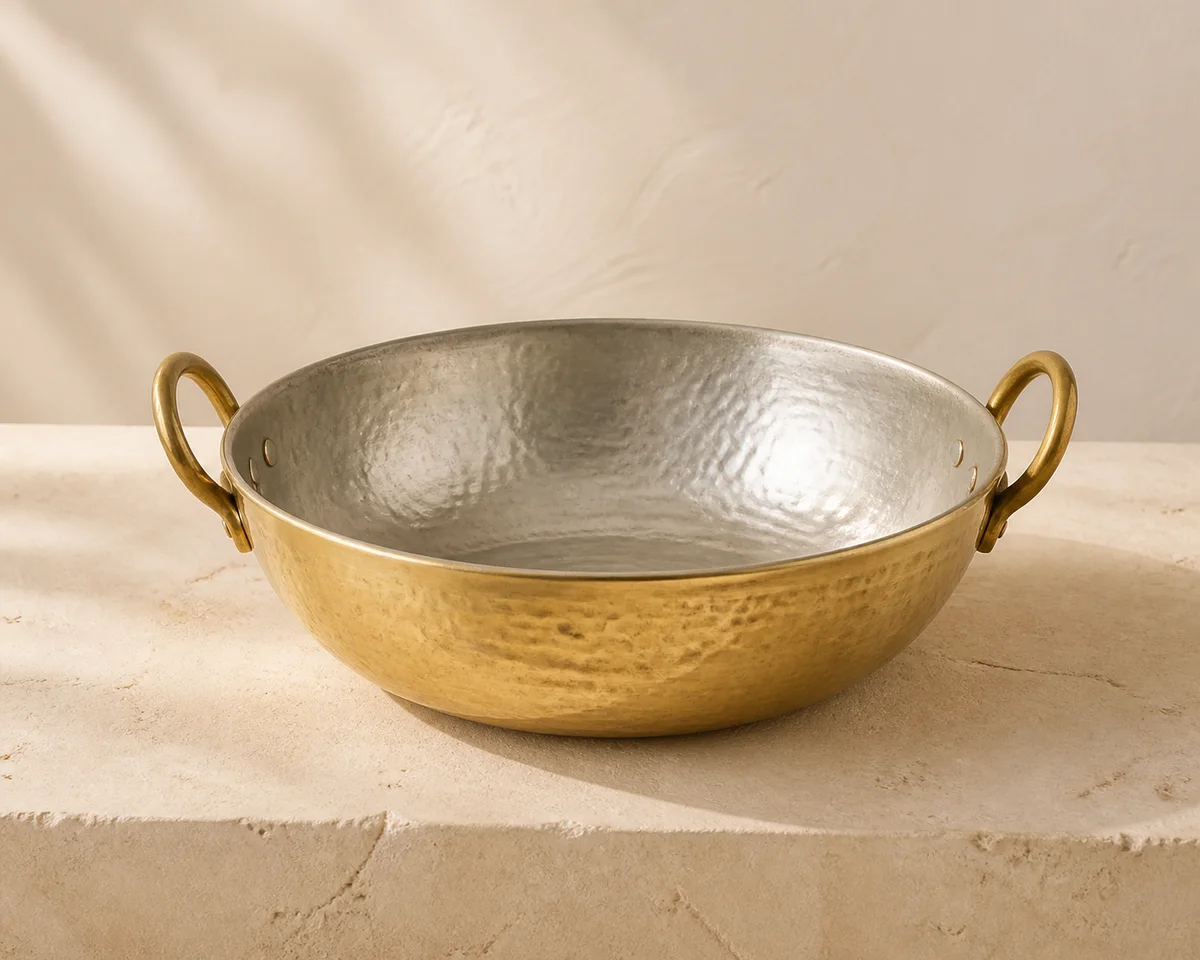
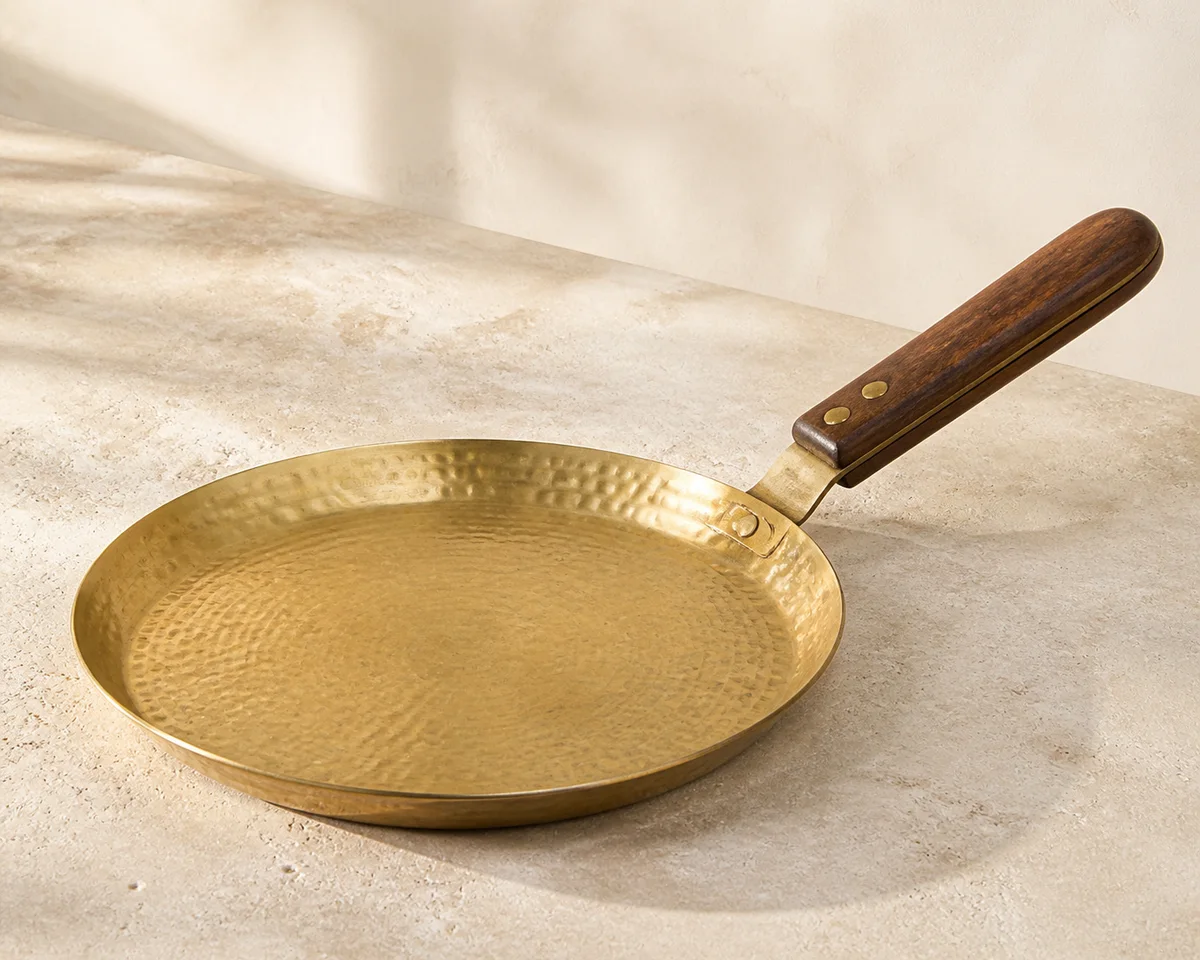
A dal-heavy household lives on one deep, wide-mouthed vessel — a lined patila earns its keep every single evening. A tawa household (parathas for breakfast, dosas on weekends) needs flat iron-like width first, depth never. Fry-lovers — pakoras, cutlets, puris — need a wider-mouthed kadhai where oil depth meets surface area correctly.
Aspiration dishes count double. That biryani you make thrice a year needs a heavy, wide-based vessel more than your daily sabzi does — dum logic punishes thin bottoms. Planning halwa season? A broad, heavy kadhai outperforms depth again.
Notice what falls out of the exercise: most kitchens converge on one or two genuinely-used shapes, which is exactly why traditional households ran on a kadhai, a patila and a tawa for generations. Catalogue abundance is modern; menu-driven need is ancient and accurate.
Also revealed: the vessel nobody needed. If no dish on your list requires that decorative mini kadhai, its absence from your order writes itself.
Dishes don't care about specifications. They care about geometry, mass and heat behaviour — which is precisely what a dish-list translates into without any jargon.
Handwritten list of favourite dishes beside two candidate vessels.