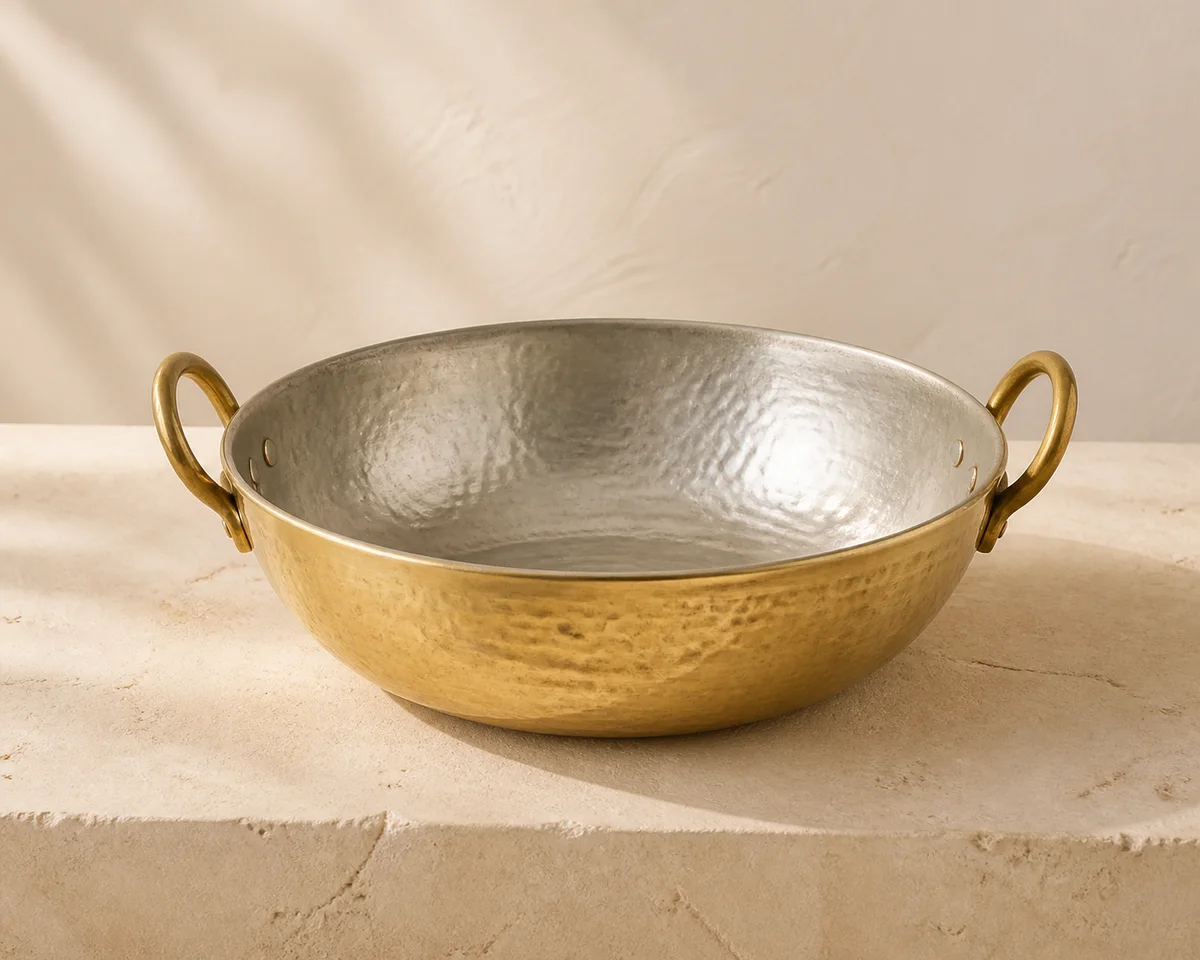
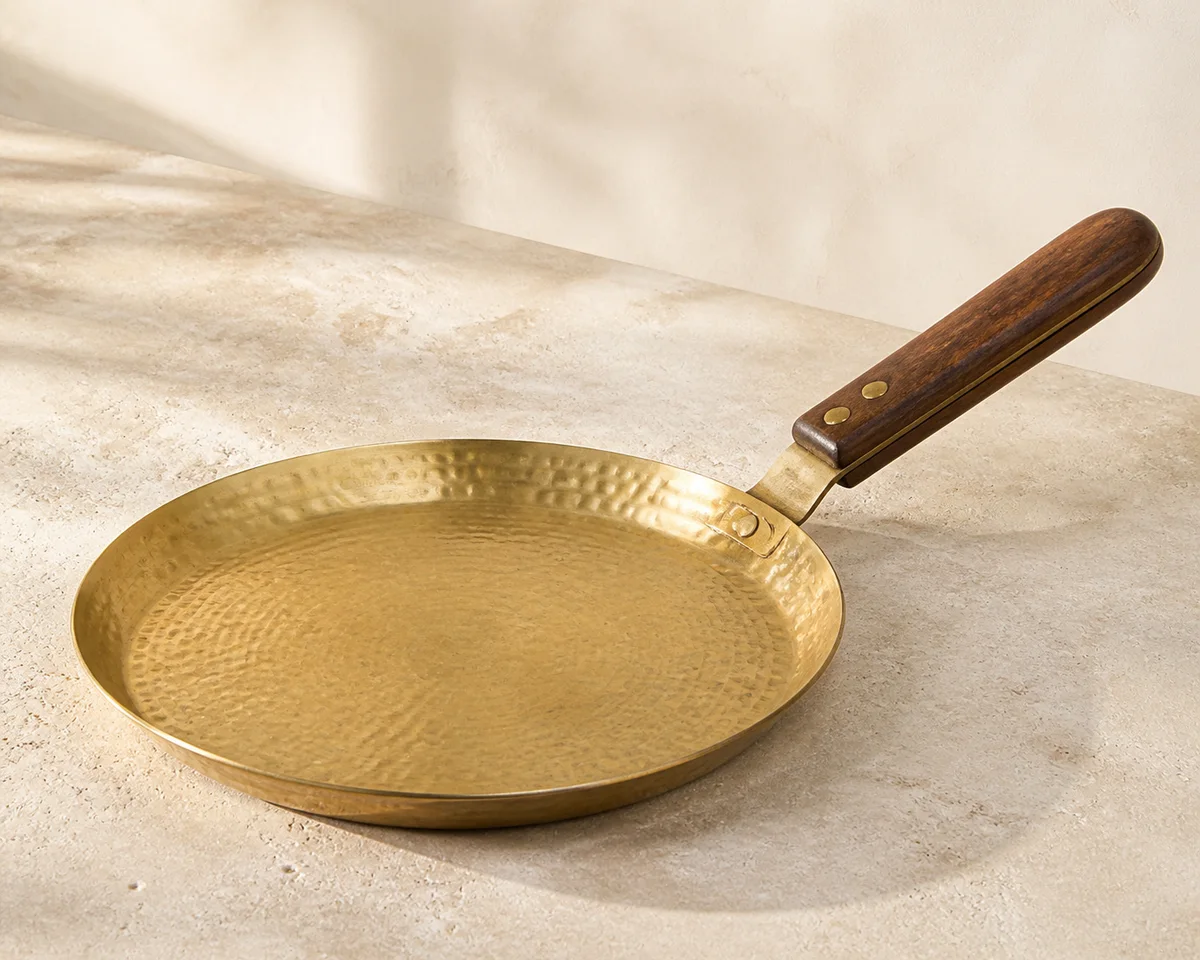
Inherited vessels create a buying problem nobody warns you about. The shelf holds history — dadi's patila, mausi's serving bowls — and every new purchase now gets compared against pieces that carry decades of head start.
Start by auditing what inheritance actually gave you:
Working pieces in regular rotation deserve respect as infrastructure, not museum objects. If grandmother's kadhai still cooks weekly, it's not competing with new purchases — it's defining which gaps remain.
Emotional pieces you'll never use (engraved ritual ware, damaged-but- precious items) should leave the functional inventory mentally. They're heirlooms; they don't count against a buying budget because they were never going to fry anything.
Duplicates reveal family patterns worth noticing. Three ladles inherited means three relatives thought ladles essential gifts — your household may have that covered indefinitely.
Then buy into gaps, not vibes. The inherited set handles slow milk work beautifully but nothing sears? A frying-capable piece enters for a reason, coexisting rather than replacing. New pieces also spare heirlooms wear — the heaviest daily duty shifting to fresh metal extends grandmother's vessel's next fifty years.
And label the lineage while elders can confirm it. A small tag or notebook note — "Amma's, Patna, wedding 1962" — turns future confusion into future story. New purchases arrive with paperwork; old ones need you to write theirs.
Old engraved brass vessel displayed beside newer hammered pieces on same shelf.