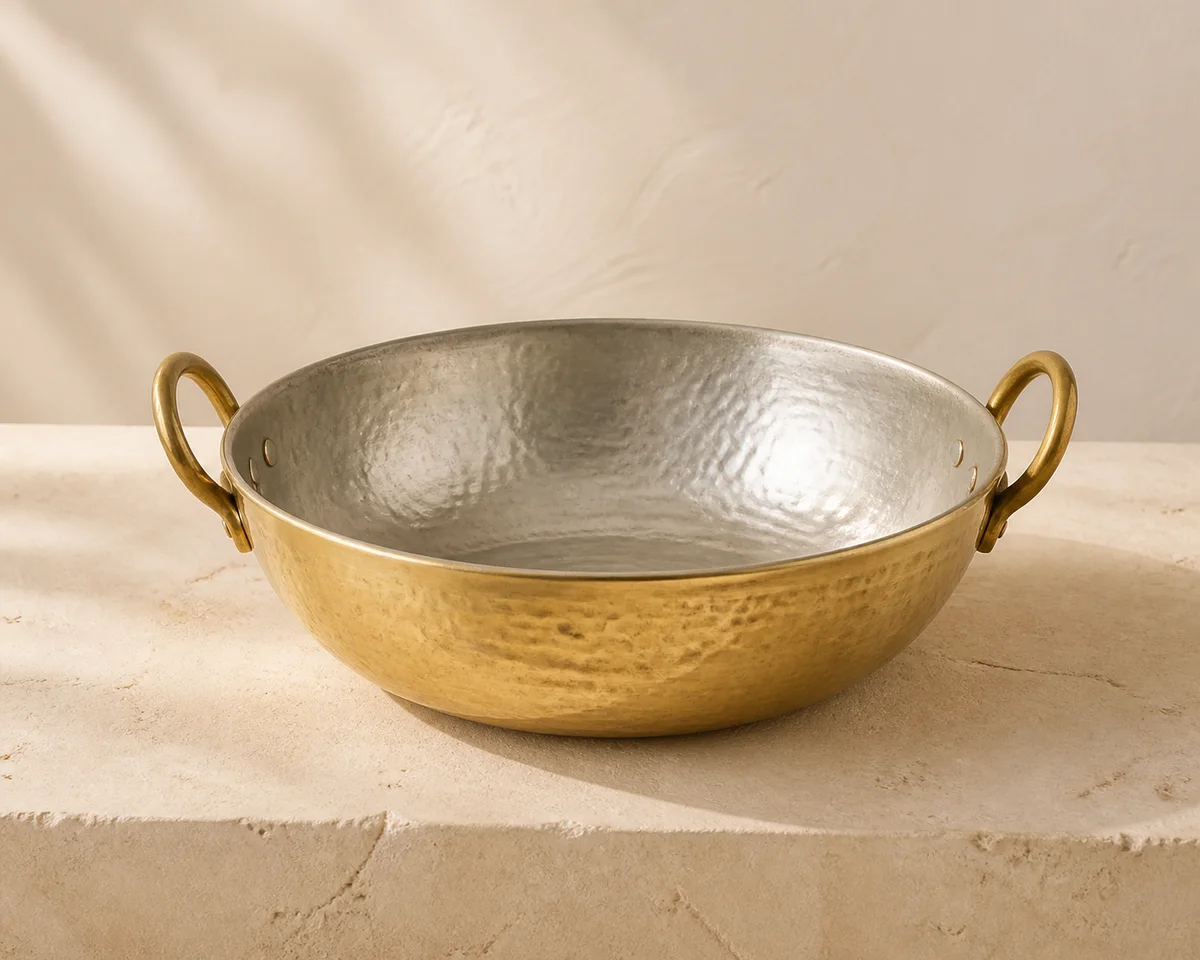
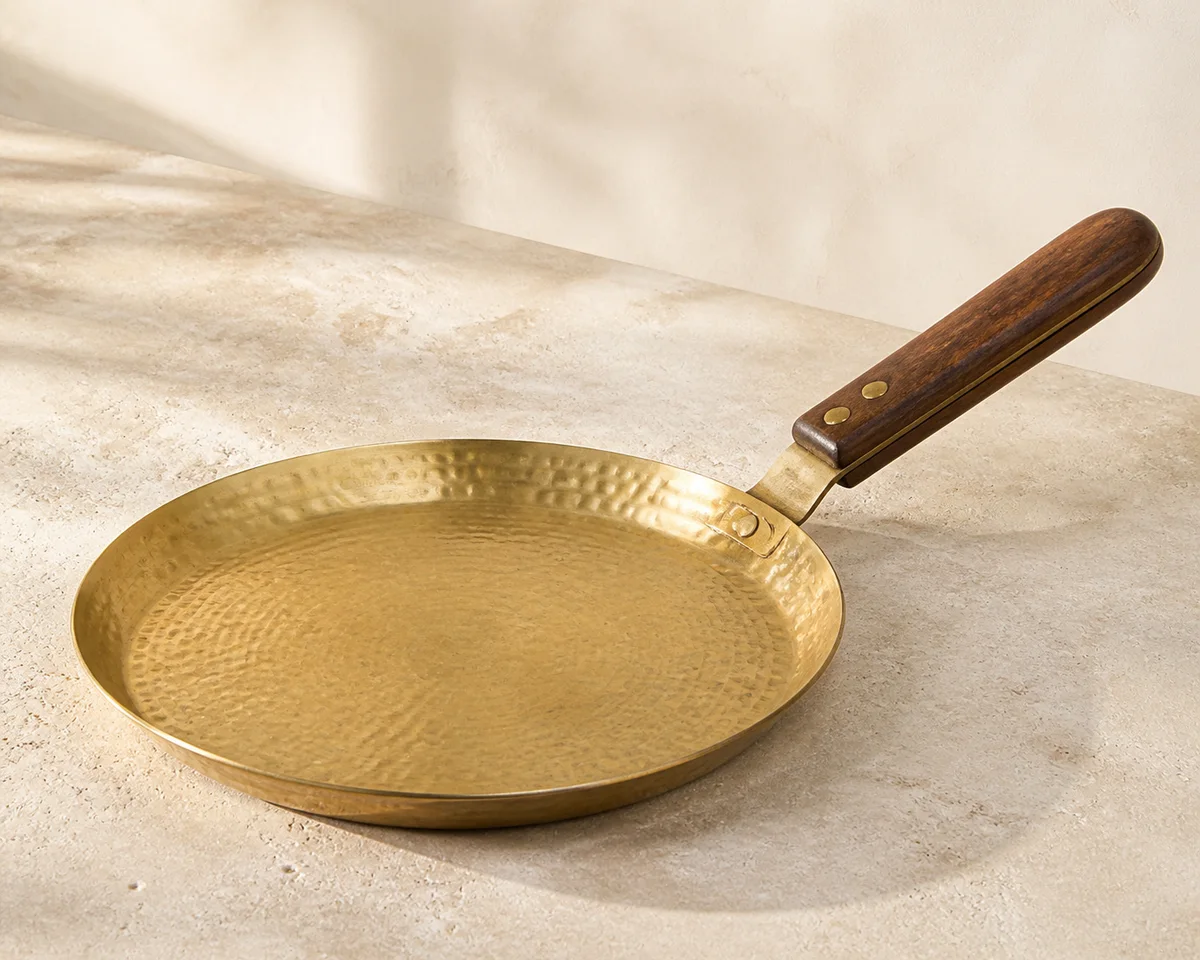
Every accumulated peetal collection splits into three honest groups, and storage follows from which group a piece belongs to.
Group one: cooks weekly. Lives arm's reach from the stove, washed after every use, stacked with cloth between pieces. These show wear, and their wear looks earned.
Group two: ceremonial or seasonal. Wedding pieces, festival-specific vessels, the annaprashan bowl. Wrapped in cloth, shelved dry, brought out, used properly, washed, dried, returned. Display shelves suit these.
Group three: inherited and retired. Grandmother's lota, pieces too thin-walled to trust on modern burners. These can sit visible. Dust them, rotate them occasionally, accept the patina.
The common mistake runs the other direction: buying new peetal for show and letting it tarnish on an open shelf, because nobody agreed to dust weekly. Open display is a maintenance commitment. If nobody will sign up, store in cloth instead.
Nothing in any group goes in the dishwasher or on induction. Storage rules change by group; washing rules do not.
Kitchen wall shelf displaying inherited peetal pieces above a working stove.